
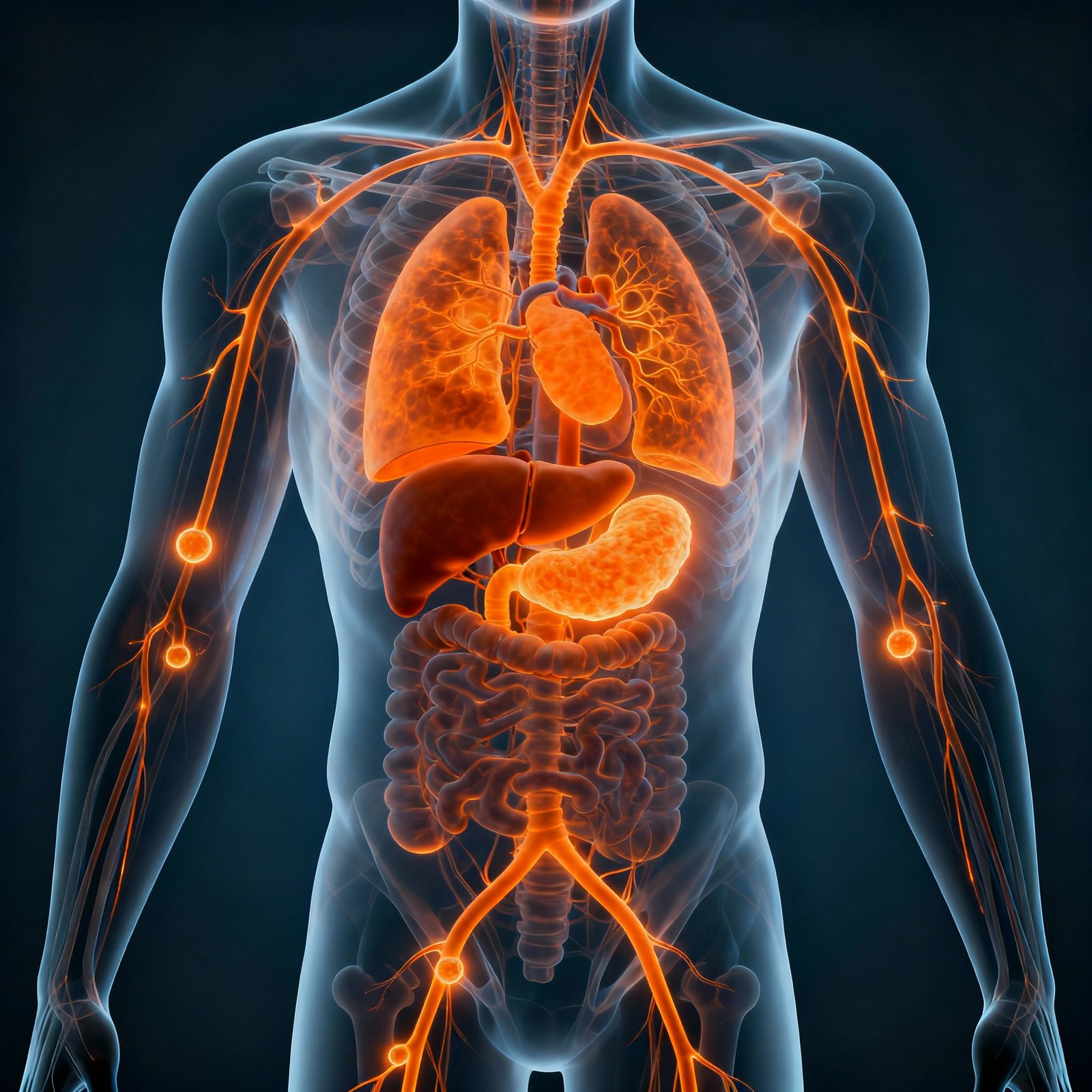
Systemic inflammation is a chronic, low-grade, and non-resolving inflammatory state characterized by the persistent elevation of pro-inflammatory markers in the bloodstream, in the absence of acute infection or injury.[1] This stands in stark contrast to acute inflammation, which is a localized, high-grade, and self-limiting physiological response essential for host defense and tissue repair. While acute inflammation is protective, chronic systemic inflammation is pathogenic, acting as a common underlying mechanism and driver of most non-communicable chronic diseases.[2] The scientific appreciation for this process has grown exponentially since the late 1990s, when researchers began to robustly link elevated levels of C-reactive protein (CRP), a sensitive marker of inflammation, with future risk of cardiovascular events like myocardial infarction and stroke.[3] This discovery helped reframe diseases like Atherosclerosis not merely as disorders of lipid accumulation but as fundamentally inflammatory conditions. This article provides a detailed scientific explanation of systemic inflammation, including its core concepts, molecular mediators, primary triggers, clinical relevance across multiple chronic diseases, and methods for its measurement and management.
Detailed Explanation
Core Concept: The Inflammatory Response
At its core, systemic inflammation represents a persistent, low-level activation of the innate immune system. This system is the body’s first line of defense, composed of cells like macrophages, neutrophils, and dendritic cells that are programmed to recognize and respond to danger signals.[4] In a healthy state, these cells are quiescent. When they detect a trigger—such as pathogens, damaged cells, or irritants—they become activated. This activation leads to the production and release of a host of signaling molecules known as cytokines, which orchestrate the inflammatory response. In acute inflammation, this process is tightly regulated and resolves once the threat is eliminated. However, in chronic systemic inflammation, the triggers are persistent and often low-level, leading to a continuous, non-resolving cycle of immune cell activation and cytokine production.[1,2] This maintains a state of constant, body-wide alert that, over time, causes collateral damage to healthy tissues and disrupts normal physiological functions. A related concept is “inflammaging,” which describes the age-associated increase in systemic inflammation, suggesting that this process is a fundamental pillar of the aging process itself and contributes to the increased prevalence of chronic diseases in older adults.[5]
Key Molecular Mediators
The state of systemic inflammation is maintained and defined by a specific set of molecules circulating in the blood. Pro-inflammatory cytokines are the primary signaling proteins. Tumor Necrosis Factor-alpha (TNF-α) is a potent cytokine primarily produced by macrophages that plays a central role in initiating the inflammatory cascade.[6] Interleukin-6 (IL-6) is another key cytokine, produced by various cells including immune cells and fat cells (adipocytes); its main function is to stimulate the liver to produce acute-phase reactants.[7] Interleukin-1 beta (IL-1β) is a powerful inflammatory mediator processed by the inflammasome, a multi-protein complex, and is a key target in several anti-inflammatory therapies.[8] In response to these cytokines, the liver produces acute-phase reactants. The most well-known and clinically measured is C-reactive protein (CRP), which rises dramatically in response to IL-6 and serves as a stable and reliable biomarker of systemic inflammation.[3] Another is fibrinogen, a clotting factor that is also elevated during inflammation and contributes to increased cardiovascular risk. The central intracellular signaling pathway that drives the production of these mediators is the Nuclear Factor-kappa B (NF-κB) pathway. When activated by triggers like TNF-α, NF-κB moves into the nucleus and switches on the genes for numerous inflammatory proteins, creating a self-amplifying loop.[9]
| Mediator | Primary Function | Associated Diseases |
|---|---|---|
| TNF-α (Cytokine) | Initiates and amplifies the inflammatory cascade; induces other cytokines. | Rheumatoid Arthritis, Psoriasis, Inflammatory Bowel Disease |
| IL-6 (Cytokine) | Stimulates liver production of acute-phase reactants (like CRP). | Cardiovascular Disease, Type 2 Diabetes, various cancers |
| CRP (Acute-Phase Reactant) | Stable downstream marker of IL-6 activity; used as a clinical biomarker. | Predictor of Myocardial Infarction, Stroke, Metabolic Syndrome |
| NF-κB (Signaling Pathway) | Master transcriptional regulator that switches on genes for inflammation. | Implicated in nearly all inflammatory diseases |
Scientific Basis
Triggers of Chronic Systemic Inflammation
Unlike acute inflammation, which is caused by a clear, transient threat, chronic systemic inflammation is driven by a host of persistent, low-level stimuli that continually activate the innate immune system. These triggers are deeply embedded in modern lifestyles and environments. Obesity, particularly an excess of visceral adipose tissue, is a primary driver. Adipose tissue is not inert; it is an active endocrine organ that secretes numerous pro-inflammatory cytokines, including TNF-α and IL-6, earning it the term “adipo-inflammation.”[10] A sedentary lifestyle contributes independently of obesity, as regular Physical Activity has potent anti-inflammatory effects.[11] Dietary patterns rich in processed foods, refined carbohydrates, and unhealthy fats (e.g., the “Western diet”) are highly pro-inflammatory, while diets rich in fruits, vegetables, and omega-3 fatty acids (e.g., the Mediterranean diet) are anti-inflammatory.[12] Dysbiosis, or an imbalance in the gut microbiome, can increase intestinal permeability (“leaky gut”), allowing bacterial components like lipopolysaccharide (LPS) to enter the bloodstream and trigger a potent inflammatory response.[13] Chronic psychological stress, through the activation of the hypothalamic-pituitary-adrenal (HPA) axis and sympathetic nervous system, also promotes inflammation.[14] Finally, persistent environmental exposures, such as air pollution (PM2.5), and chronic, low-grade infections (e.g., periodontal disease) act as constant irritants that fuel the inflammatory fire.[15]
Clinical Relevance
Cardiovascular Disease (CVD)
Systemic inflammation is no longer considered just a risk marker but a causal factor in the development and progression of Atherosclerosis and its clinical consequences.[16] The “inflammatory hypothesis of atherothrombosis” posits that inflammation is involved in all stages of the disease. It begins with endothelial dysfunction, where pro-inflammatory cytokines reduce the bioavailability of nitric oxide and increase the expression of adhesion molecules, promoting the recruitment of leukocytes (like monocytes) into the artery wall.[17] These monocytes then differentiate into macrophages, ingest oxidized LDL cholesterol to become foam cells, and form the fatty streak—the earliest lesion of Atherosclerosis. Continued inflammatory signaling promotes the growth of the plaque, the formation of a fibrous cap, and the eventual production of matrix metalloproteinases that can degrade the cap, leading to plaque rupture and acute thrombotic events like myocardial infarction or stroke.[18] This causal link has been solidified by landmark clinical trials. The JUPITER trial demonstrated that statin therapy reduced cardiovascular events in individuals with low LDL cholesterol but high hs-CRP, suggesting a benefit from inflammation reduction.[19] More definitively, the CANTOS trial showed that targeting the IL-1β pathway with canakinumab, a monoclonal antibody, significantly reduced recurrent cardiovascular events independent of lipid-lowering, providing the first direct proof that inhibiting inflammation can prevent cardiovascular disease.[20]
| Clinical Trial | Intervention | Key Finding |
|---|---|---|
| JUPITER (2008) | Rosuvastatin | Reduced major CV events in patients with elevated hs-CRP but normal LDL-C. |
| CANTOS (2017) | Canakinumab (IL-1β inhibitor) | Reduced recurrent CV events independent of lipid-lowering, confirming the inflammatory hypothesis. |
Metabolic Syndrome & Type 2 Diabetes
Systemic inflammation is a key pathophysiological link between obesity and its metabolic consequences, including insulin resistance and type 2 diabetes.[21] Pro-inflammatory cytokines like TNF-α, produced by inflamed adipose tissue, can directly interfere with insulin signaling pathways in muscle and liver cells. They achieve this by promoting the phosphorylation of insulin receptor substrate-1 (IRS-1) at serine residues, which inhibits its normal function and blunts the downstream effects of insulin, leading to a state of insulin resistance.[22] Furthermore, chronic inflammation can impair the function and survival of pancreatic β-cells, the cells responsible for producing insulin. Cytokines can induce β-cell apoptosis (programmed cell death), gradually reducing the body’s capacity to secrete insulin and contributing to the progression from insulin resistance to overt type 2 diabetes.[23]
Neurodegenerative & Mental Health Disorders
A growing body of evidence implicates systemic inflammation in the pathogenesis of brain disorders. The concept of “neuroinflammation,” an inflammatory response within the central nervous system, is now central to our understanding of neurodegeneration.[24] Systemic inflammatory mediators can communicate with the brain through several pathways. They can cross a compromised blood-brain barrier (BBB), be actively transported across it, or stimulate vagal nerve afferents that signal to the brain. Inside the brain, these signals activate microglia, the resident immune cells of the CNS. While acutely protective, chronic microglial activation leads to the sustained release of neurotoxic substances, contributing to synaptic dysfunction and neuronal death.[25] This process is strongly implicated in Alzheimer’s disease, where inflammation is thought to both drive and be driven by amyloid-beta pathology, and in Parkinson’s disease. Moreover, the “inflammatory theory of depression” suggests that elevated peripheral inflammation contributes to the development of major depressive disorder by altering neurotransmitter metabolism, neurogenesis, and neural circuit function.[26]
Measurement
The clinical assessment of systemic inflammation relies on measuring circulating biomarkers. By far the most widely used and well-validated biomarker is high-sensitivity C-reactive protein (hs-CRP).[3,27] CRP is an acute-phase reactant produced by the liver in direct response to IL-6. The “high-sensitivity” assay allows for the precise measurement of very low levels of CRP within the normal range, which reflect underlying chronic inflammation. For cardiovascular risk assessment, hs-CRP levels are typically stratified as: low risk (<1.0 mg/L), average risk (1.0 to 3.0 mg/L), and high risk (>3.0 mg/L).[28] Other biomarkers exist but are used less commonly due to cost, variability, or lack of specificity. Interleukin-6 (IL-6) can be measured directly but has a short half-life and greater biological variability, making it less reliable for routine clinical use.[7] The Erythrocyte Sedimentation Rate (ESR) is an older, indirect measure of inflammation that reflects levels of fibrinogen and other acute-phase reactants, but it is non-specific and influenced by many other factors.
| Biomarker | Normal Range / Risk Cutoffs (mg/L) | Clinical Interpretation |
|---|---|---|
| hs-CRP |
Low Risk: <1.0 Average Risk: 1.0 – 3.0 High Risk: >3.0 |
The gold standard for assessing cardiovascular risk from inflammation. |
| IL-6 | Typically <5 pg/mL | Upstream cytokine; more variable and less stable than hs-CRP. Used more in research. |
Management and Interventions
Given the central role of systemic inflammation in chronic disease, strategies to reduce it are a cornerstone of prevention and treatment. Lifestyle modifications are the most powerful and accessible interventions. Adherence to an anti-inflammatory diet, such as the Mediterranean diet, rich in fruits, vegetables, nuts, whole grains, fish, and olive oil, has been robustly shown to lower inflammatory markers like CRP.[12,29] Regular Physical Activity has potent anti-inflammatory effects, mediated in part by the release of anti-inflammatory myokines from muscle and a reduction in visceral fat.[11] Maintaining a healthy body weight, managing stress, and obtaining adequate sleep are also critical. Pharmaceutical interventions also play a role. Statins, in addition to their lipid-lowering effects, have significant anti-inflammatory properties (pleiotropic effects), which contribute to their cardiovascular benefits.[19] More targeted therapies, like the IL-1β inhibitor canakinumab, have proven the concept of purely anti-inflammatory therapy for CVD, though their use is currently limited to high-risk patients.[20]
References
- Furman D, Campisi J, Verdin E, et al. Chronic inflammation in the etiology of disease across the life span. Nat Med. 2019;25(12):1822-1832. doi:10.1038/s41591-019-0675-0. PMID: 31806905.
- Libby P. Inflammatory Mechanisms: The Molecular Basis of Inflammation and Disease. Nutr Rev. 2007;65(12 Pt 2):S140-S146. doi:10.1111/j.1753-4887.2007.tb00352.x. PMID: 18240738.
- Ridker PM, Hennekens CH, Buring JE, Rifai N. C-reactive protein and other markers of inflammation in the prediction of cardiovascular disease in women. N Engl J Med. 2000;342(12):836-843. doi:10.1056/NEJM200003233421202. PMID: 10738043.
- Medzhitov R. Origin and physiological roles of inflammation. Nature. 2008;454(7203):428-435. doi:10.1038/nature07201. PMID: 18650913.
- Franceschi C, Bonafè M, Valensin S, et al. Inflamm-aging. An evolutionary perspective on immunosenescence. Ann N Y Acad Sci. 2000;908:244-254. doi:10.1111/j.1749-6632.2000.tb06651.x. PMID: 10911963.
- Hotamisligil GS. Inflammation and metabolic disorders. Nature. 2006;444(7121):860-867. doi:10.1038/nature05485. PMID: 17167474.
- Gabay C. Interleukin-6 and chronic inflammation. Arthritis Res Ther. 2006;8(Suppl 2):S3. doi:10.1186/ar1967. PMID: 16899107.
- Dinarello CA. Interleukin-1β and the autoinflammatory diseases. N Engl J Med. 2009;360(23):2467-2470. doi:10.1056/NEJMe0903332. PMID: 19494218.
- Lawrence T. The nuclear factor NF-kappaB pathway in inflammation. Cold Spring Harb Perspect Biol. 2009;1(6):a001651. doi:10.1101/cshperspect.a001651. PMID: 20457564.
- Wellen KE, Hotamisligil GS. Inflammation, stress, and diabetes. J Clin Invest. 2005;115(5):1111-1119. doi:10.1172/JCI25102. PMID: 15864338.
- Pedersen BK. Anti-inflammatory effects of exercise: role in diabetes and cardiovascular disease. Eur J Clin Invest. 2017;47(8):600-611. doi:10.1111/eci.12781. PMID: 28627043.
- Estruch R, Ros E, Salas-Salvadó J, et al. Primary prevention of cardiovascular disease with a Mediterranean diet. N Engl J Med. 2013;368(14):1279-1290. doi:10.1056/NEJMoa1200303. PMID: 23432189.
- Cani PD, Osto M, Geurts L, Everard A. Involvement of gut microbiota in the development of low-grade inflammation and type 2 diabetes associated with obesity. Gut Microbes. 2012;3(4):279-288. doi:10.4161/gmic.19625. PMID: 22572877.
- Kiecolt-Glaser JK, Derry HM, Fagundes CP. Inflammation: depression fans the flames and feasts on the heat. Am J Psychiatry. 2015;172(11):1075-1091. doi:10.1176/appi.ajp.2015.15020152. PMID: 26522509.
- Brook RD, Rajagopalan S, Pope CA 3rd, et al. Particulate matter air pollution and cardiovascular disease: An update to the scientific statement from the American Heart Association. Circulation. 2010;121(21):2331-2378. doi:10.1161/CIR.0b013e3181dbece1. PMID: 20458016.
- Libby P, Ridker PM, Hansson GK. Progress and challenges in translating the biology of Atherosclerosis. Nature. 2011;473(7347):317-325. doi:10.1038/nature10146. PMID: 21593864.
- Gimbrone MA Jr, García-Cardeña G. Endothelial cell dysfunction and the pathobiology of Atherosclerosis. Circ Res. 2016;118(4):620-636. doi:10.1161/CIRCRESAHA.115.306301. PMID: 26917604.
- Hansson GK. Inflammation, Atherosclerosis, and coronary artery disease. N Engl J Med. 2005;352(16):1685-1695. doi:10.1056/NEJMra043430. PMID: 15843671.
- Ridker PM, Danielson E, Fonseca FA, et al. Rosuvastatin to prevent vascular events in men and women with elevated C-reactive protein. N Engl J Med. 2008;359(21):2195-2207. doi:10.1056/NEJMoa0807646. PMID: 18997196.
- Ridker PM, Everett BM, Thuren T, et al. Antiinflammatory therapy with canakinumab for atherosclerotic disease. N Engl J Med. 2017;377(12):1119-1131. doi:10.1056/NEJMoa1707914. PMID: 28845751.
- Shoelson SE, Lee J, Goldfine AB. Inflammation and insulin resistance. J Clin Invest. 2006;116(7):1793-1801. doi:10.1172/JCI29069. PMID: 16823477.
- Hotamisligil GS, Shargill NS, Spiegelman BM. Adipose expression of tumor necrosis factor-alpha: direct role in obesity-linked insulin resistance. Science. 1993;259(5091):87-91. doi:10.1126/science.7678183. PMID: 7678183.
- Donath MY, Shoelson SE. Type 2 diabetes as an inflammatory disease. Nat Rev Immunol. 2011;11(2):98-107. doi:10.1038/nri2925. PMID: 21233852.
- Heneka MT, Carson MJ, El Khoury J, et al. Neuroinflammation in Alzheimer’s disease. Lancet Neurol. 2015;14(4):388-405. doi:10.1016/S1474-4422(15)70016-5. PMID: 25792098.
- Ransohoff RM. How neuroinflammation contributes to neurodegeneration. Science. 2016;353(6301):777-783. doi:10.1126/science.aag2590. PMID: 27540166.
- Miller AH, Raison CL. The role of inflammation in depression: from evolutionary imperative to modern treatment target. Nat Rev Immunol. 2016;16(1):22-34. doi:10.1038/nri.2015.5. PMID: 26711676.
- Pepys MB, Hirschfield GM. C-reactive protein: a critical update. J Clin Invest. 2003;111(12):1805-1812. doi:10.1172/JCI18921. PMID: 12813013.
- Pearson TA, Mensah GA, Alexander RW, et al. Markers of inflammation and cardiovascular disease: application to clinical and public health practice: A statement for healthcare professionals from the Centers for Disease Control and Prevention and the American Heart Association. Circulation. 2003;107(3):499-511. doi:10.1161/01.cir.0000052939.59093.45. PMID: 12551878.
- Chrysohoou C, Panagiotakos DB, Pitsavos C, Das UN, Stefanadis C. Adherence to the Mediterranean diet attenuates inflammation and coagulation process in healthy adults: The ATTICA Study. J Am Coll Cardiol. 2004;44(1):152-158. doi:10.1016/j.jacc.2004.03.039. PMID: 15234424.


Leave a Reply