
Introduction
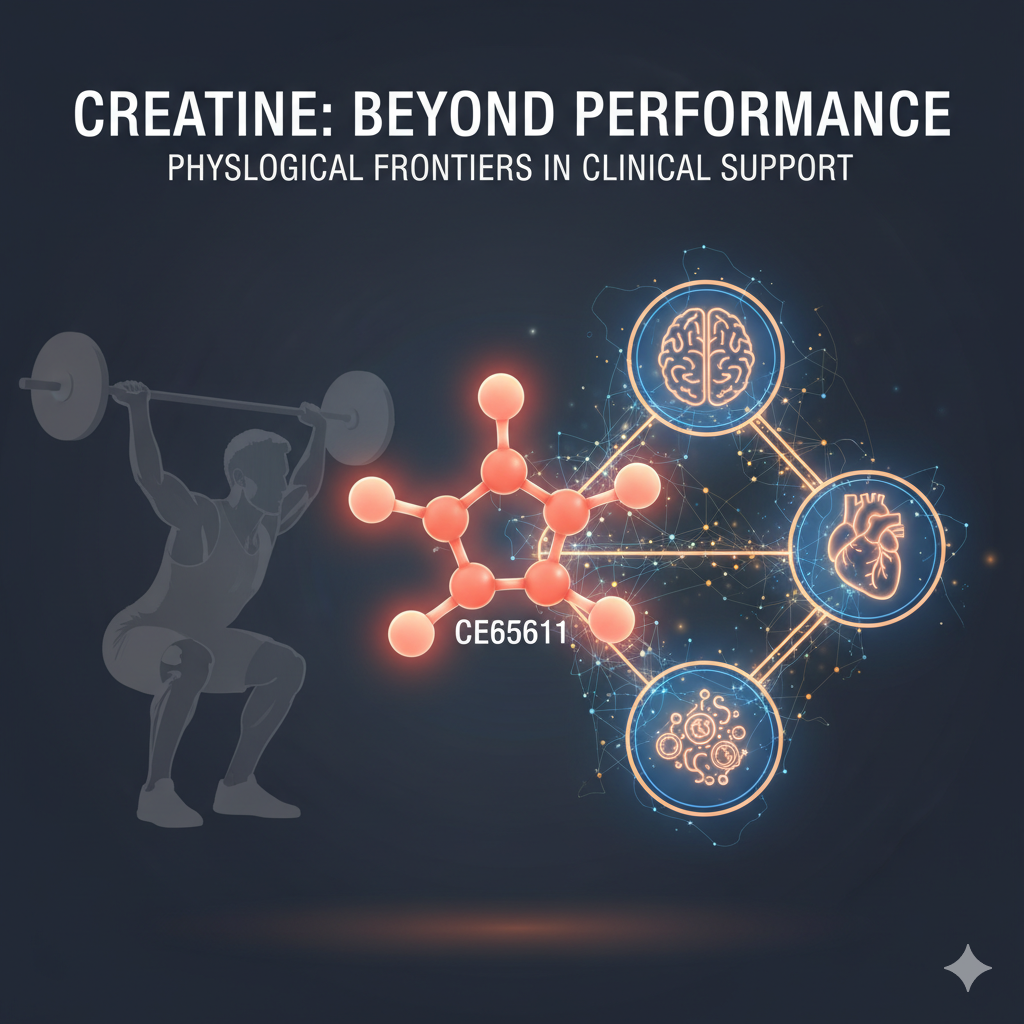
It is a surprising fact that creatine stands as one of the most rigorously studied supplements on the planet, yet its profound therapeutic potential is often overlooked in clinical discussions about managing creatine in chronic disease.[1] At the heart of many chronic illnesses lies a common physiological challenge: a decline in cellular energy production, the very currency of life known as ATP.[2] This energy deficit can accelerate muscle wasting, impair cognitive function, and disrupt metabolic health. By supporting the body’s fundamental phosphocreatine energy system, creatine supplementation offers a powerful, evidence-based strategy to improve physiological resilience against the relentless demands of chronic disease.[3] This article explores the compelling science behind creatine’s role as a versatile therapeutic agent.
Table 1: Learning Objectives
| Objective | Outcome |
|---|---|
| Understand creatine’s core role in cellular energy metabolism. | Appreciate why energy support is critical in chronic illness. |
| Explore the evidence for creatine in muscle, metabolic, and brain health. | Recognize creatine’s broad therapeutic applications beyond sports. |
| Review the safety and practical considerations for clinical use. | Feel confident discussing creatine supplementation with a healthcare provider. |
A Foundation of Energy: Countering Muscle Wasting
Many chronic diseases are characterized by a catabolic state, leading to debilitating muscle loss conditions like sarcopenia (age-related) and cachexia (disease-related).[4] This muscle wasting severely impacts quality of life, mobility, and overall prognosis. Creatine intervenes directly at the energetic root of this problem. By increasing the intramuscular pool of phosphocreatine, it enhances the cell’s ability to rapidly regenerate ATP during periods of stress.[5] This improved energy availability has been shown to bolster mitochondrial function, reduce markers of oxidative stress, and promote an anabolic environment conducive to muscle protein synthesis.[6] Consequently, numerous clinical trials have demonstrated that creatine supplementation, often combined with resistance training, can significantly increase muscle mass, strength, and physical function in older adults and various patient populations.[7]
Beyond Muscle: Metabolic and Cardiovascular Support
The energetic benefits of creatine extend far beyond skeletal muscle, showing significant promise for improving metabolic and cardiovascular health. Conditions like metabolic syndrome and type 2 diabetes are linked to impaired cellular energy handling and insulin resistance. Emerging research suggests creatine may improve glucose management by increasing the expression of GLUT4 transporters, which are responsible for pulling glucose out of the bloodstream and into muscle cells.[8] Furthermore, creatine may help lower levels of homocysteine, an amino acid linked to an increased risk of cardiovascular events.[9] By reducing oxidative stress and supporting the bioenergetics of cardiac tissue, creatine provides a multi-faceted approach to protecting the cardiovascular system, a critical consideration in the long-term management of chronic disease.
Table 2: Creatine’s Impact on Metabolic Markers in Clinical Studies
| Metabolic Marker | Observed Effect with Creatine | Population Studied |
|---|---|---|
| Glycated Hemoglobin (HbA1c) | Improved glycemic control | Type 2 Diabetes |
| Insulin Sensitivity | Enhanced glucose uptake | Sedentary Adults |
| Homocysteine | Significant reduction | Healthy Volunteers |
| Lipid Profiles | Reduction in VLDL | Postmenopausal Women |
The Brain’s Energy Buffer: Neuroprotective Potential
The brain is an energy-hungry organ, consuming about 20% of the body’s total oxygen and calories despite making up only 2% of its weight. This immense metabolic demand makes it vulnerable to the energy deficits common in chronic disease, which can manifest as cognitive fog, depression, and an accelerated risk of neurodegeneration.[10] Creatine acts as a critical energy buffer within the brain, helping to maintain stable ATP levels during periods of high demand or metabolic stress. Studies have shown that oral creatine supplementation can increase creatine levels in the brain, leading to improvements in cognitive function, memory, and processing speed, particularly in stressful conditions like sleep deprivation.[11] This neuroprotective capacity is now being explored for its potential to slow the progression of diseases like Parkinson’s and Huntington’s, offering a new frontier for creatine’s therapeutic use.[12]
Takeaway
The overwhelming body of evidence positions creatine as far more than a supplement for athletes. It is a fundamental regulator of cellular energy that addresses a core physiological weakness in many chronic diseases. By supporting the health of muscle, metabolic systems, and the brain, creatine represents a new therapeutic paradigm focused on building physiological resilience from the cell up.
“We are just scratching the surface. The future of creatine is not in the locker room, but in the clinic, as a foundational tool to help patients live better, more functional lives in the face of chronic illness.”
— Dr. Richard Kreider, Texas A&M University
References
- Kreider RB, Kalman DS, Antonio J, et al. International Society of Sports Nutrition position stand: safety and efficacy of creatine supplementation in exercise, sport, and medicine. J Int Soc Sports Nutr. 2017;14:18. doi:10.1186/s12970-017-0173-z PMID: 28615996
- Wallimann T, Wyss M, Brdiczka D, Nicolay K, Eppenberger HM. Intracellular compartmentation, structure and function of creatine kinase isoenzymes in tissues with high and fluctuating energy demands: the ‘phosphocreatine circuit’ for cellular energy homeostasis. Biochem J. 1992;281(Pt 1):21-40. doi:10.1042/bj2810021 PMID: 1731757
- Antonio J, Candow DG, Forbes SC, et al. Common questions and misconceptions about creatine supplementation: what does the scientific evidence really show? J Int Soc Sports Nutr. 2021;18(1):13. doi:10.1186/s12970-021-00412-w PMID: 33557850
- Cruz-Jentoft AJ, Sayer AA. Sarcopenia. Lancet. 2019;393(10191):2636-2646. doi:10.1016/S0140-6736(19)31138-9 PMID: 31171417
- Bessman SP, Carpenter CL. The creatine-creatine phosphate energy shuttle. Annu Rev Biochem. 1985;54:831-62. doi:10.1146/annurev.bi.54.070185.004151 PMID: 3896131
- Gualano B, Roschel H, Lancha AH Jr, Brightbill CE, Rawson ES. In sickness and in health: the widespread application of creatine supplementation. Amino Acids. 2012;43(2):519-29. doi:10.1007/s00726-011-1132-7 PMID: 22038531
- Candow DG, Forbes SC, Chilibeck PD, Cornish SM, Antonio J, Roschel H. Effectiveness of Creatine Supplementation on Aging Muscle and Bone: Focus on Sarcopenia and Osteoporosis. Nutrients. 2021;13(4):1287. doi:10.3390/nu13041287 PMID: 33919532
- Gualano B, de Salles Painelli V, Roschel H, et al. Creatine supplementation in type 2 diabetes: a randomized, double-blind, placebo-controlled trial. Med Sci Sports Exerc. 2011;43(5):770-8. doi:10.1249/MSS.0b013e3181fcee7d PMID: 21311367
- Korzun WJ. Oral creatine supplements lower plasma homocysteine concentrations in humans. Clin Lab Sci. 2004;17(2):102-6. PMID: 15168897
- Attwell D, Laughlin SB. The energy budget for signalling in the grey matter of the brain. J Cereb Blood Flow Metab. 2001;21(10):1133-45. doi:10.1097/00004647-200110000-00001 PMID: 11598490
- Rae C, Digney AL, McEwan SR, Bates TC. Oral creatine monohydrate supplementation improves brain performance: a double-blind, placebo-controlled, cross-over trial. Proc Biol Sci. 2003;270(1529):2147-50. doi:10.1098/rspb.2003.2492 PMID: 14561278
- Bender A, Klopstock T. Creatine for neuroprotection in neurodegenerative disease: end of story? Amino Acids. 2016;48(8):1929-40. doi:10.1007/s00726-015-2165-0 PMID: 26707923
Useful Resources
- Examine.com: An independent and unbiased database of scientific research on supplementation, with a comprehensive page on creatine.
- International Society of Sports Nutrition (ISSN): The professional organization that publishes key position stands on the safety and efficacy of creatine.
- National Institute on Aging (NIA): Provides patient-friendly information on sarcopenia and the importance of maintaining muscle mass.
- NIH Office of Dietary Supplements: A detailed fact sheet for health professionals covering creatine’s mechanisms and research.
Frequently Asked Questions
Is creatine safe for people with kidney disease?
For individuals with pre-existing, stable chronic kidney disease, studies show that creatine supplementation does not harm kidney function. However, it is absolutely essential to consult a nephrologist before starting, as outlined in the National Kidney Foundation guidelines.
What is the recommended dose for clinical populations?
Unlike athletic dosing, a clinical maintenance dose is typically smaller. Most studies use a consistent daily dose of 3-5 grams without a “loading phase.” This approach is effective for gradually increasing muscle creatine stores over several weeks, as detailed in the ISSN Position Stand.
Do I need to cycle creatine?
No, there is no scientific evidence to support the need for cycling creatine. Continuous daily intake is shown to be safe and effective for maintaining elevated creatine stores. More information on continuous use can be found on resources like Stronger by Science.
Which type of creatine is best?
Creatine monohydrate is the most extensively studied, effective, and affordable form. While many other forms exist (e.g., ethyl ester, HCL), none have been conclusively shown to be superior to monohydrate. The research database at Examine.com provides a thorough comparison.
Can creatine cause dehydration or cramping?
This is a common myth. In fact, research shows the opposite. Creatine increases total body water and has been shown to reduce the incidence of cramping and dehydration during exercise. This is a key point in the comprehensive common questions and misconceptions review.
Future Blog Topics
| Upcoming Article | Coming Soon | Why It Matters |
|---|---|---|
| The Cognitive Edge: A Deep Dive into Creatine and Brain Health | November 2025 | Explores the latest research on how creatine impacts memory, mood, and cognitive resilience. |
| Beyond the Scoop: Clinical Dosing Protocols for Creatine | December 2025 | Provides evidence-based dosing strategies for non-athletic populations. |
| Debunking the Myths: Answering Your Toughest Creatine Questions | January 2026 | Addresses common safety concerns and misconceptions with direct scientific evidence. |





Leave a Reply