

The Science of Writing: How Words Shape Thought
Writing is one of humanity’s most powerful inventions. At first glance, it looks like nothing more than putting words on a page. Yet modern science shows that writing is far more than communication — it is a cognitive tool that shapes how we think, learn, and even heal.
Writing as a Tool for Learning
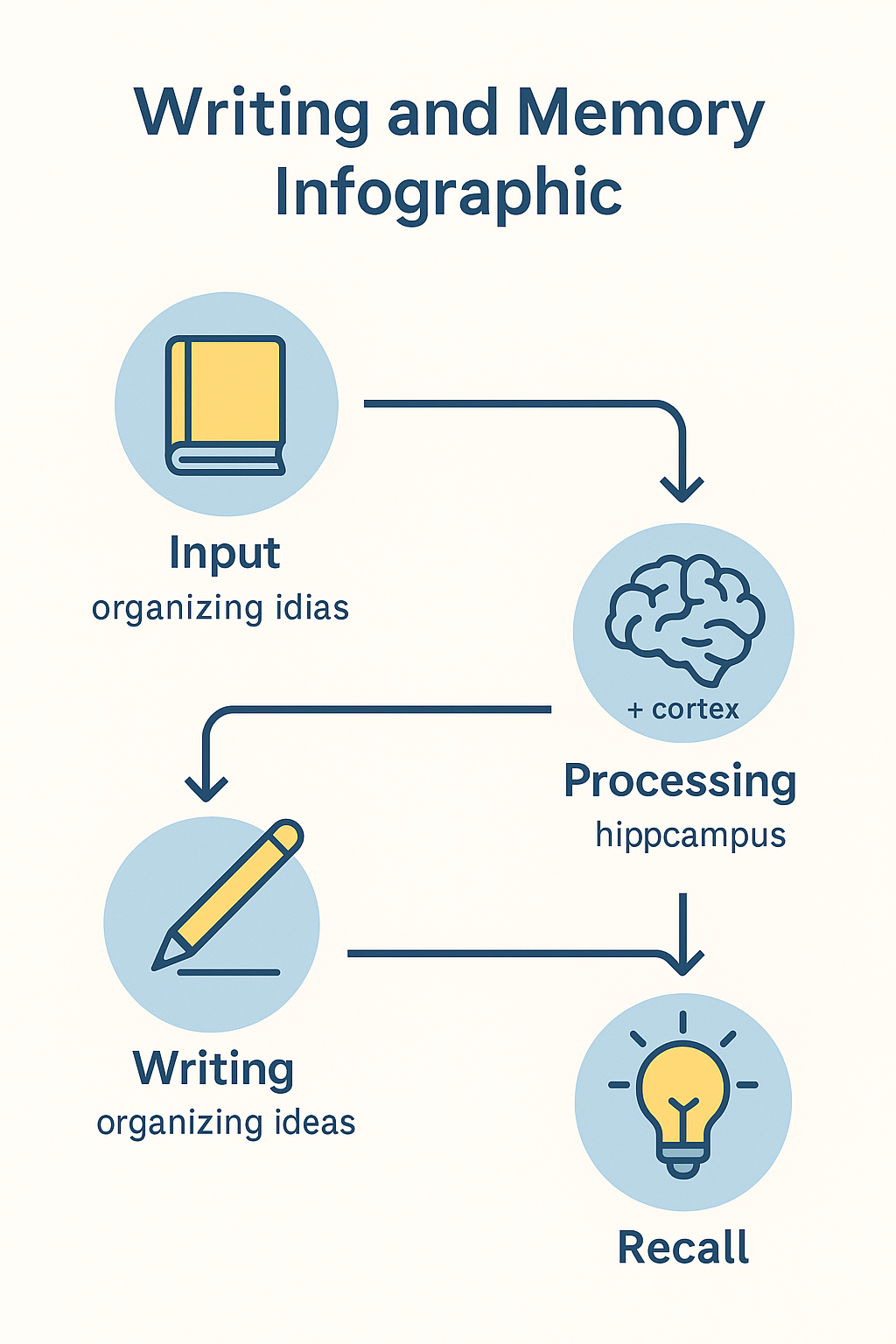
Psychologists have long known that writing strengthens memory. When we translate thoughts into words, we are engaging in what researchers call “elaborative rehearsal.” This process forces the brain to organize and reframe information, making it easier to recall later [1]. Students who take notes by hand, for instance, tend to remember concepts better than those who only read or listen [2].
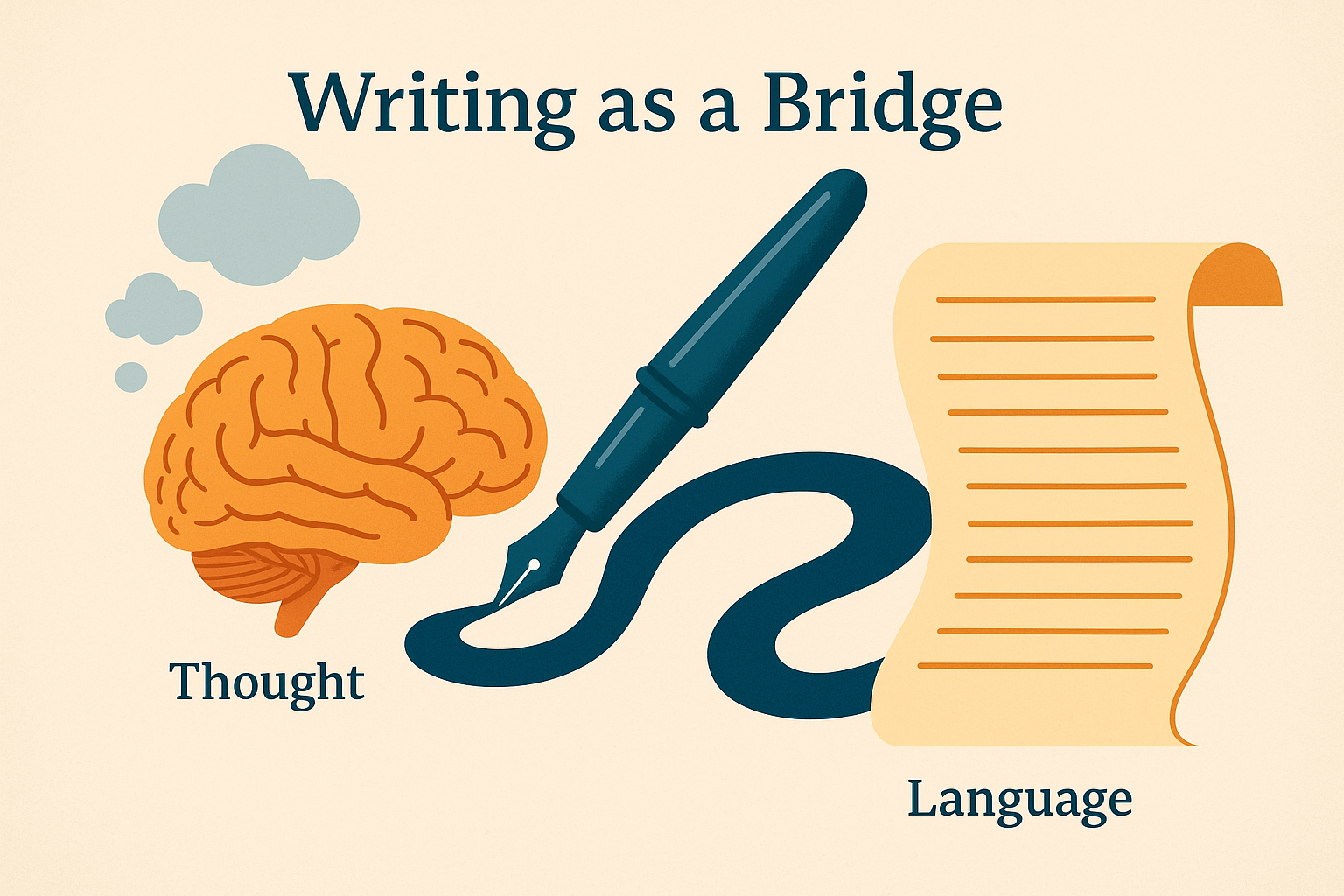
In essence, writing externalizes thought — turning fleeting ideas into stable structures that can be reviewed, reorganized, and refined.
The Neuroscience of Writing
Neuroimaging studies reveal that writing recruits a network of brain regions, including the prefrontal cortex (planning), motor cortex (movement), and hippocampus (memory consolidation) [3]. These areas do not work in isolation but in concert, binding together the mechanics of language, the rhythm of movement, and the integration of knowledge.
Writing also promotes neuroplasticity — the brain’s ability to form and strengthen new connections. By practicing the skill over time, people can literally rewire how efficiently they process language and thought.
Writing and Creativity
When writers describe “getting into the flow,” science points to the default mode network (DMN). This brain system, active during daydreaming and spontaneous thought, plays a key role in generating new ideas [4]. Writing taps into this network by allowing divergent thinking — the ability to explore multiple possibilities — and then linking it to convergent thinking, which structures those ideas into coherent narratives.
This unique blend makes writing both imaginative and disciplined, an activity that fosters innovation across domains from literature to scientific discovery.
Writing for Wellbeing
Beyond learning and creativity, writing can support mental health. Pioneering studies on expressive writing show that journaling about difficult emotions can reduce stress, improve immune function, and even speed physical healing [5]. The act of translating raw feelings into language appears to help people regulate emotions and gain perspective on their experiences.
This therapeutic benefit explains why writing interventions are increasingly used in clinical psychology, from trauma therapy to mindfulness practices. Writing, it turns out, is not just an art but a form of medicine.
Takeaway
Science shows that writing is not only a tool for sharing ideas but a way of shaping the mind itself. It strengthens memory, rewires the brain, fuels creativity, and supports wellbeing. Far from being a simple skill, writing is one of the most profound technologies of thought that humans have ever developed.
Useful References
- Pinker S. The Sense of Style. New York: Viking; 2014.
- Ong WJ. Orality and Literacy. Routledge; 2002.
- Lamott A. Bird by Bird: Some Instructions on Writing and Life. Anchor; 1994.
- Penrose AM, Katz SB. Writing in the Sciences: Exploring Conventions of Scientific Discourse. Pearson; 2010.
- King S. On Writing: A Memoir of the Craft. Scribner; 2000.
FAQs
Q: Does handwriting vs typing change brain activity?
A: Yes. Studies suggest handwriting engages deeper sensory-motor integration and memory pathways compared to typing, which may lead to stronger recall [2].
Q: Can writing make you smarter?
A: Writing improves learning and critical thinking by forcing the brain to structure information, so while it doesn’t raise IQ directly, it enhances problem-solving and reasoning skills [1].
Q: Is journaling as effective as therapy?
A: Expressive writing can reduce stress and help regulate emotions, but it should be seen as complementary rather than a replacement for professional therapy when dealing with serious conditions [5].
References
- Roediger HL, Butler AC. The critical role of retrieval practice in long-term retention. Trends Cogn Sci. 2011;15(1):20–7.
- Mueller PA, Oppenheimer DM. The pen is mightier than the keyboard: Advantages of longhand over laptop note taking. Psychol Sci. 2014;25(6):1159–68.
- Dehaene S, Cohen L. The unique role of the visual word form area in reading. Trends Cogn Sci. 2011;15(6):254–62.
- Beaty RE, Benedek M, Kaufman SB, Silvia PJ. Default and executive network coupling supports creative idea production. Sci Rep. 2015;5:10964.
- Pennebaker JW. Writing about emotional experiences as a therapeutic process. Psychol Sci. 1997;8(3):162–6.



Leave a Reply