
Introduction
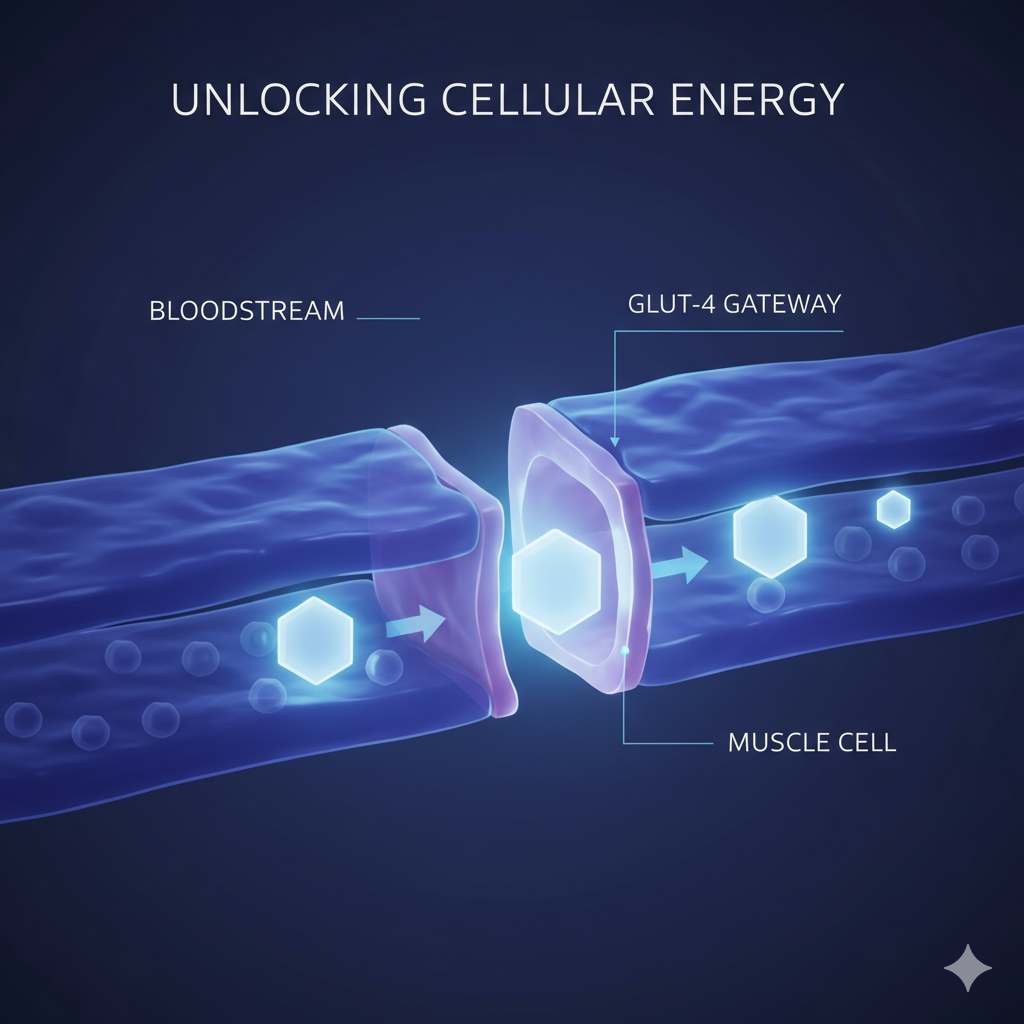
Diabetes management often focuses on insulin, but what if there was another way to help your cells absorb the glucose they need for energy? The secret lies with a protein called GLUT-4, which acts as a cellular gateway for glucose. Understanding how to activate this gateway through exercise and medication provides a powerful strategy for controlling blood sugar and reducing the risk of long-term complications.
Key Point: Both exercise and the drug metformin can trigger GLUT-4 to move to the cell surface, allowing glucose to enter from the bloodstream, a process that can occur even when the body’s response to insulin is impaired.
| Strategy | Strengths | Weaknesses |
|---|---|---|
| Insulin-Dependent | Highly effective in healthy individuals. | Can be impaired by insulin resistance in type 2 diabetes. |
| Insulin-Independent | Bypasses insulin resistance. Activated by exercise & metformin. | Requires proactive lifestyle changes or medication. |
THE INSULIN-LIKE EFFECT OF EXERCISE
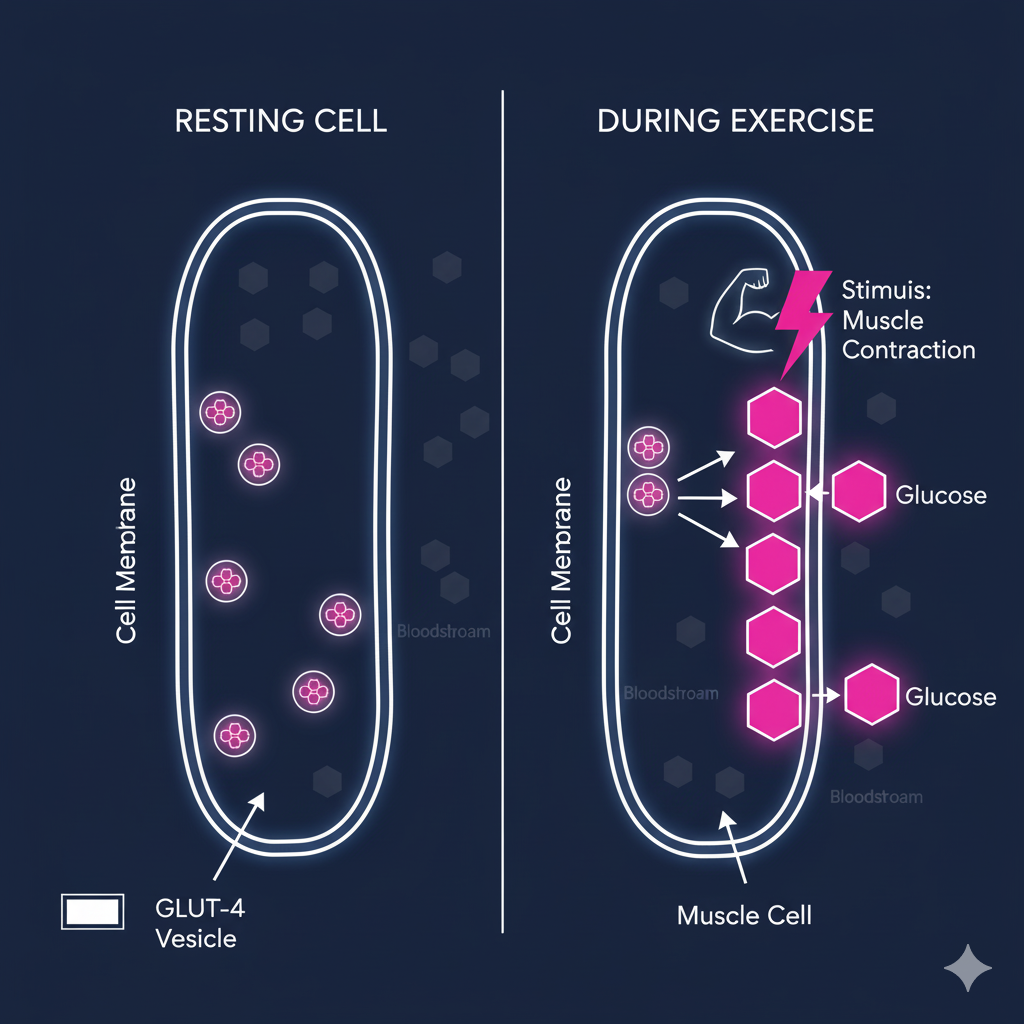
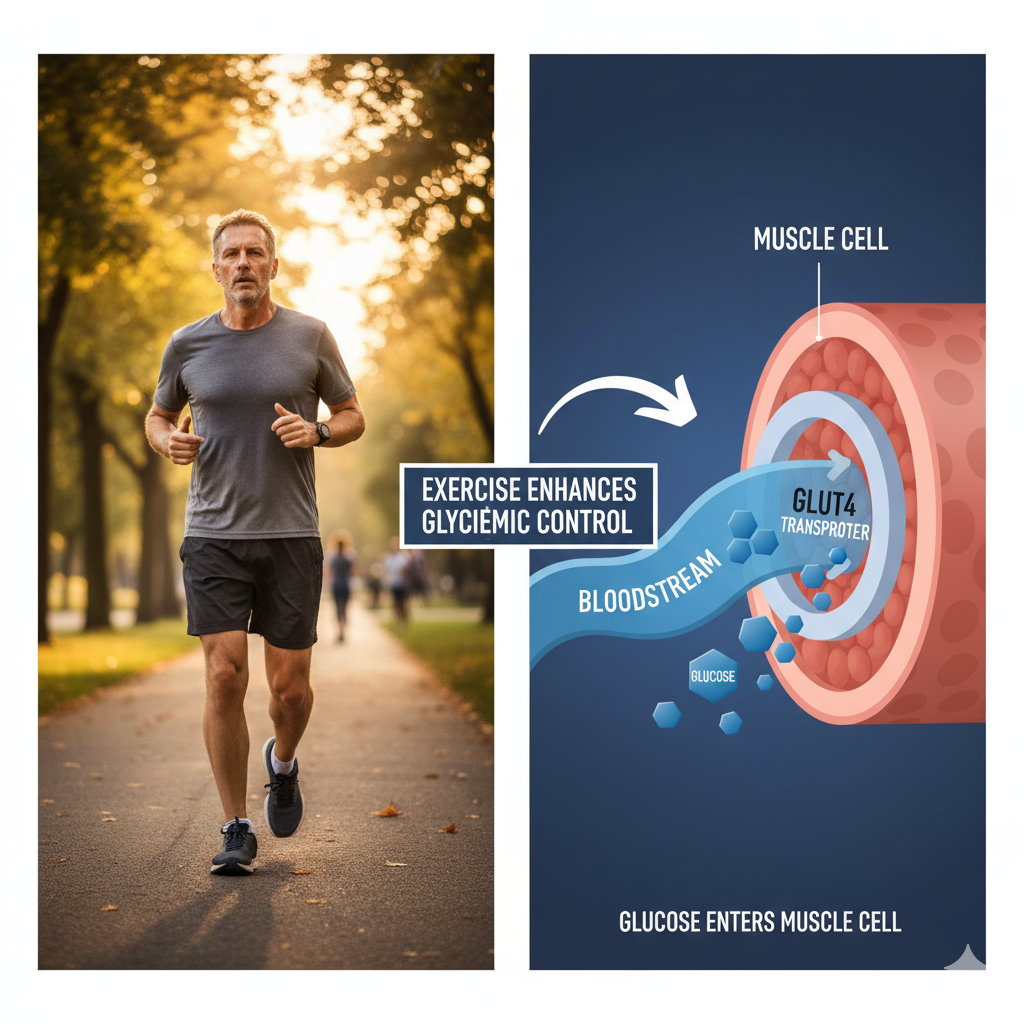
When you exercise, your muscle contractions create an energy demand that triggers a powerful, secondary pathway for glucose uptake [1]. This process moves GLUT-4 transporters to the surface of muscle cells, allowing them to absorb glucose directly from the blood without relying on insulin. This insulin-like effect is crucial, as it provides an effective way to lower blood sugar levels even in individuals with significant insulin resistance.
Key Point: Muscle contraction during physical activity is a potent, non-pharmacological stimulus for GLUT-4 translocation and glucose uptake.
METFORMIN’S ROLE IN GLUCOSE UPTAKE
Metformin is a cornerstone medication for type 2 diabetes that shares a remarkable similarity with exercise in its mechanism of action [2]. It helps lower blood sugar by activating an enzyme known as AMP-activated protein kinase (AMPK), which in turn promotes the movement of GLUT-4 to the cell surface. This makes metformin an effective tool for enhancing glucose uptake in muscle cells, thereby improving glycemic control.
Key Point: Metformin improves blood sugar control in part by mimicking the effects of exercise on the GLUT-4 transport system.
| Insulin | Exercise | Metformin | |
|---|---|---|---|
| Primary Pathway | PI3K/Akt pathway | AMPK pathway | AMPK pathway |
| Requires Insulin? | Yes | No | No |
| Affected by Resistance? | Yes | No | No |
PREVENTING DIABETES COMPLICATIONS
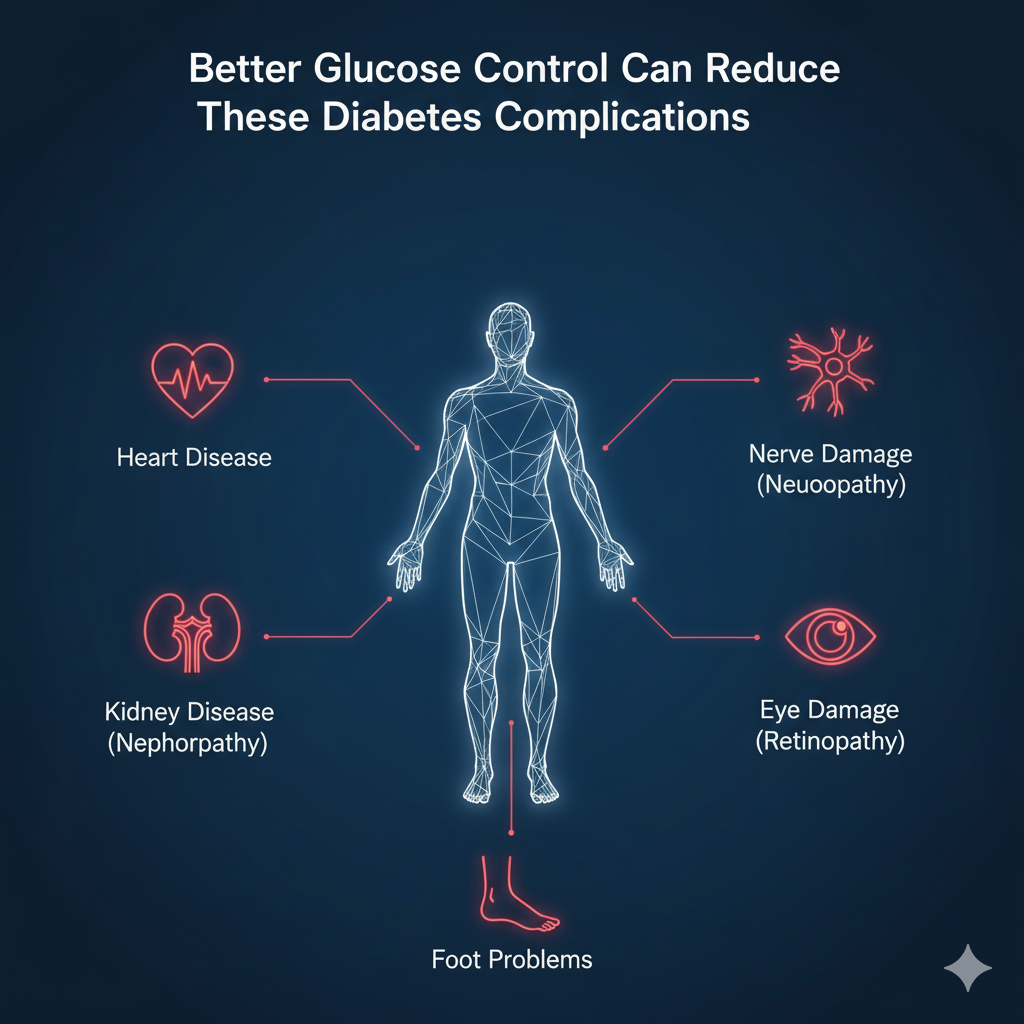
By improving blood sugar control, the activation of GLUT-4 through both exercise and metformin plays a vital role in preventing the serious long-term complications of diabetes [3]. Consistently high blood glucose can damage nerves, blood vessels, and organs over time, leading to issues like neuropathy, retinopathy, and cardiovascular disease. Leveraging these insulin-independent pathways is therefore a key strategy for long-term health.
Key Point: Better glucose control, facilitated by GLUT-4 activation, is directly linked to a reduced risk of developing debilitating diabetes complications.
Takeaway
Activating the GLUT-4 glucose transport system is a powerful and essential strategy for managing type 2 diabetes. By incorporating regular exercise into your routine and using medications like metformin as prescribed, you can effectively bypass insulin resistance and maintain better control over your blood sugar. This proactive approach is fundamental to preventing complications and leading a healthier life.
“Exercise is a cornerstone of therapy for the prevention and management of type 2 diabetes mellitus.” [3]


Leave a Reply