Introduction
Definition
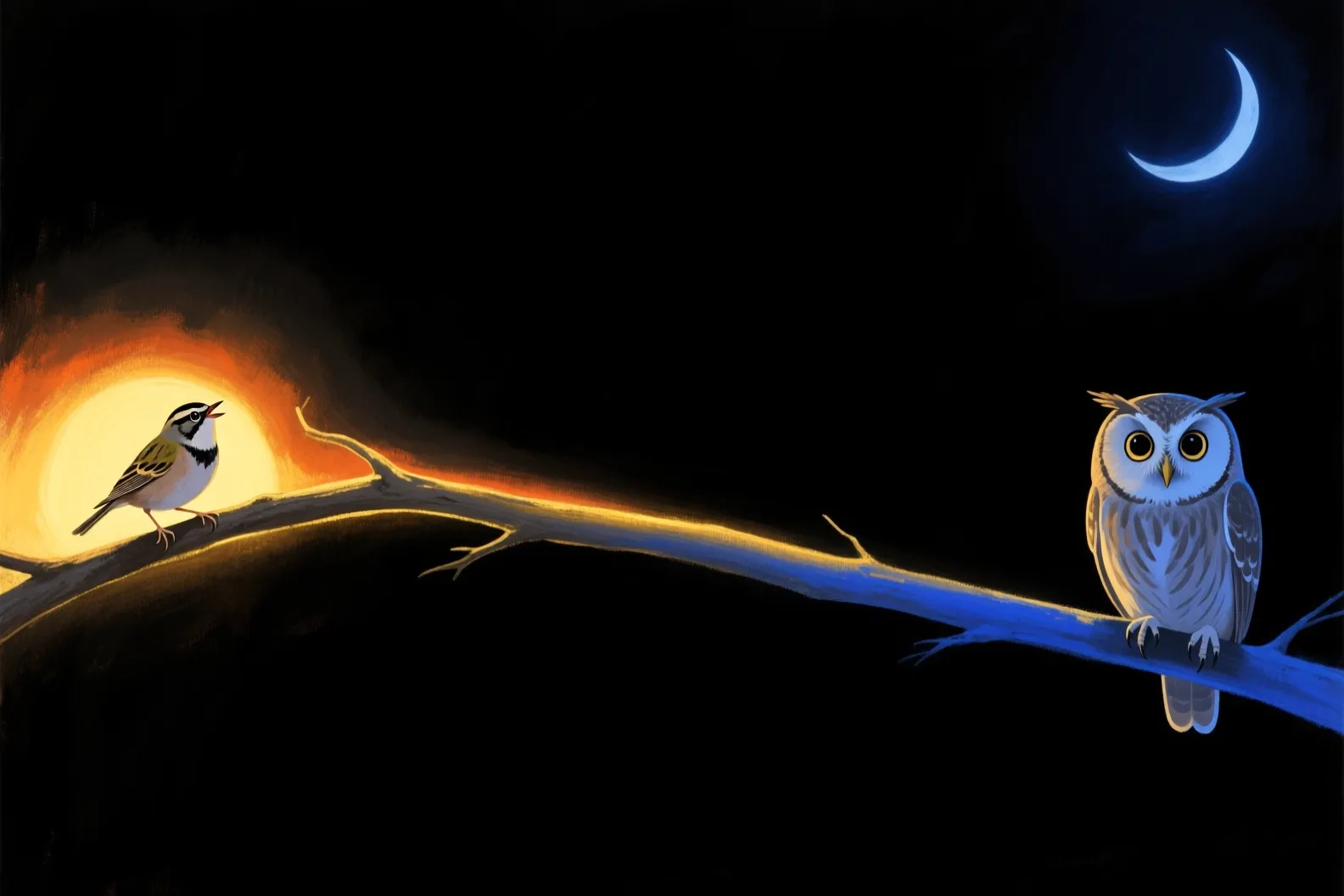
A chronotype is a person’s position on the spectrum from early to late daily timing, most visible in the preferred timing of sleep and wakefulness. It reflects how the internal circadian clock aligns with the 24-hour day, so rhythms in physiology, cognition and behavior run earlier in some people and later in others.1,2 Early types are often called larks, and late types owls.3
Context
Researchers have measured chronotype for decades, first as a preference for morning or evening and later as the actual timing of sleep on days without obligations.2,3 In large surveys, chronotypes form a near-normal distribution, with extreme early types waking up around the time extreme late types fall asleep.4 Genes, age, sex and light exposure all shape a person’s chronotype.5 Because work and school schedules suit early types best, chronotype also influences sleep debt, social jetlag and several health outcomes.6,7
Scope
This entry covers how chronotype arises and how researchers measure it, how it varies with age, sex and environment, and the evidence on health and performance. It closes with practical applications and open debates. The entries on circadian rhythm and social jetlag cover related ground.
Detailed Explanation
Components
Chronotype has a biological core and a behavioral expression. The core lies in the circadian clock, whose timing relative to the light-dark cycle differs between individuals.2,4 The behavioral expression is the timing of sleep, meals and activity that people choose when free of social constraints.3 Researchers therefore describe chronotype in two broad ways. One describes preference, such as the hour at which a person would choose to rise. The other describes behavior, such as the actual midpoint of sleep on free days.2,8
Preference questionnaires came first. The Morningness-Eveningness Questionnaire (MEQ) and the Composite Scale of Morningness (CSM) ask when people feel best, when they would choose to sleep and when they perform well.2,9 These tools sort people into morning, intermediate and evening types.2 The Munich ChronoType Questionnaire (MCTQ) takes a different approach. It asks for actual sleep times on workdays and on free days separately.3 It then defines chronotype as the midpoint of sleep on free days, corrected for the extra sleep that people take after a short-sleeping week.4,8
The two approaches agree well. In a Dutch internet survey of 5,055 respondents, 2,481 of whom completed both questionnaires, the MEQ score correlated with the free-day midpoint of sleep at r = -0.73.10 The MEQ score also correlated more strongly with the midpoint of sleep than with sleep onset, rise time or any other point of the sleep period.10 By contrast, the correlation with the workday midpoint was weaker, at r = -0.61, because work schedules compress the natural differences.10 Beyond this agreement, the MCTQ also collects detail on sleep under natural conditions that preference scales do not capture.10 More than 55,000 people had completed the MCTQ by 2007, and the data helped refine its algorithm.4 The same data showed that the timing and the duration of sleep vary largely independently of each other. When analyzed separately for workdays and free days, however, sleep duration depends strongly on chronotype.4
Most people fall between the extremes. In a Korean cohort of 1,620 middle-aged adults, 29.6% were morning types, 5.9% evening types and 64.5% neither.11 Sleep times in an early pilot survey of 500 people differed widely between workdays and free days, except in extreme early types.3 During the workweek, late chronotypes built up a considerable sleep debt, which they repaid on free days by sleeping several hours longer.3 Researchers use the sleep-wake cycle, body temperature, cortisol and melatonin as biological markers to separate the types.2 Reviews also link circadian typology with differences in cognitive abilities, personality traits and the incidence of psychiatric disorders, as well as with adjustment to shift work and jet lag.2
Sleep and wake times in a population follow a near-Gaussian curve, and differences in the circadian clock account for most of that spread.4 Extreme types sit at both tails of this curve, while most people fall near the middle.4 Laboratory studies show that chronotype tracks the timing of the internal clock itself. Under a 27-hour modified constant routine, 12 evening types and 10 morning types differed by 2 to 3 hours in sleep onset, rising time, core temperature and melatonin rhythms.12 Their subjective sleepiness rhythms, by contrast, differed by 5 to 9 hours.12 All 22 participants were young, healthy good sleepers.12 The authors concluded that subjective alertness plays a large role in the choice of sleep times. They also suggested that evening types may face a higher risk of delayed sleep phase disorder.12
| Term | Meaning | How it is assessed |
|---|---|---|
| Chronotype | Individual position on the early-to-late timing spectrum | Questionnaire, sleep diary, actigraphy or circadian phase |
| Morning type (lark) | Early preferred timing of sleep and peak function | High MEQ score; early free-day midpoint of sleep |
| Evening type (owl) | Late preferred timing of sleep and peak function | Low MEQ score; late free-day midpoint of sleep |
| Morningness-eveningness | Preference-based description of chronotype | MEQ or Composite Scale of Morningness |
| Free-day midpoint of sleep | Behavior-based marker of chronotype | MCTQ, corrected for catch-up sleep |
| Circadian phase | Timing of the internal clock itself | Dim light melatonin onset or core temperature rhythm |
Variations in Chronotype
Age produces the largest systematic change. In American Time Use Survey diaries from 53,689 people, the distribution looked near-normal overall and within each age group.1 Its mean, however, shifted later during adolescence, reached its latest point at about 19 years and then moved earlier.1 The greatest differences fell between ages 15 and 25, which accounted for more than half of the total change across all age groups.1 Adolescents are, on average, the latest chronotypes of any age group.1 Earlier work had already proposed the peak in lateness as a biological marker for the end of adolescence.13 Timing then continues to move earlier into older age.14
Sex adds a second layer. In the same American data, men had later chronotypes than women before age 40 and earlier chronotypes after 40.1 Variability also decreased with age and ran higher in men than in women.1
Work and school schedules interfere most with the sleep of late types, who show the largest differences between workdays and free days.6 These weekly differences give rise to social jetlag.6 Light exposure shapes chronotype as well. In a survey of 500 people, more time outdoors in daylight correlated with earlier sleep.3 Modern lighting, with little daylight by day and electric light at night, has moved the human clock later. During a week of camping under natural light alone, the internal clocks of late chronotypes moved closest to those of early types.15 Clock policy matters too. In a survey of 55,000 people, sleep timing on free days followed the seasonal change in dawn under standard time but not under daylight saving time.16 The timing of activity also failed to adjust to the spring change of clocks, especially in late chronotypes.16 Even within a single time zone, human sleep follows the east-west progression of dawn.16 Chronotype therefore reflects both a stable biological tendency and the light environment that a person lives in.5,15
Key points: chronotype describes early or late daily timing. It peaks in lateness at about 19 years, differs by sex before and after age 40, and shifts earlier with more daylight.
Scientific Basis
Genetic and Physiological Mechanisms
Rare mutations in clock genes show that single genes can set chronotype. In familial advanced sleep phase syndrome, affected people behave as extreme larks, with sleep, temperature and melatonin rhythms advanced by about 4 hours.17 The trait passes from parent to child in a dominant pattern. Researchers traced one such family to a mutation in the clock gene PER2 that reduces phosphorylation of its protein by casein kinase 1 epsilon.17 At the other extreme, a dominant variant of the clock gene CRY1 causes a hereditary form of delayed sleep phase disorder.18 This variant strengthens the binding of the CRY1 protein to the clock activators CLOCK and BMAL1 and lengthens the period of molecular rhythms.18 Its frequency reaches 0.6% in some populations, so it may affect sleep in a sizeable number of people.18
Common genetic variants explain much more of everyday variation. Family studies show that chronotype is heritable, and three large genome-wide association studies (GWAS) of people of European ancestry agreed on several genes.19 Several genes not previously linked to chronotype emerged from these studies.19 A study of 89,283 people identified 15 loci, seven of them near established circadian genes such as PER2, PER3 and FBXL3.20 That study also linked morningness with insomnia and other sleep traits.20 A study of 100,420 UK Biobank participants added 12 new loci and pointed to light-sensing pathways.21 Its genetic correlation analysis also suggested that chronotype shares pathways with schizophrenia, educational attainment and possibly BMI.21 Combining both sources, a study of 697,828 people raised the number of known loci from 24 to 351.22 In 85,760 participants who wore activity monitors, the 5% carrying the most morningness alleles slept 25 minutes earlier on average than the 5% carrying the fewest.22
These genes act on the same clock that governs circadian rhythm in general. The loci identified in the largest study clustered in genes for circadian regulation and for cAMP, glutamate and insulin signaling, and in genes active in the retina, hypothalamus and pituitary.22 A person’s intrinsic clock timing, together with light exposure, sets the phase at which the clock entrains to the 24-hour day.2,4 For evening types, that phase falls later, so the release of melatonin and the fall in core temperature occur later in the evening.12 Their bodies therefore remain in biological night later into the morning than those of morning types.6,12 Differences in chronotype may arise from three related properties. These are the build-up of homeostatic sleep pressure, the intrinsic period of the circadian clock, and the phase angle at which the clock entrains to light.14
Evidence
Large cohorts link a late chronotype with poorer health. In the UK Biobank, 433,268 adults reported their chronotype, and researchers followed them for an average of 6.5 years.7 Compared with definite morning types, definite evening types had higher odds of every comorbidity examined, most strongly psychological disorders, with an odds ratio of 1.94.7 The odds ratios reached 1.30 for diabetes and 1.25 for neurological disorders.7 Definite evening types also had a 10% higher risk of death from any cause, with a hazard ratio of 1.10.7 These results held after adjustment for age, sex, smoking, BMI, sleep duration and socioeconomic status.7
Metabolic studies point in the same direction. In the Finnish FINRISK 2007 survey of 6,258 adults, evening types had 2.5-fold higher odds of type 2 diabetes than morning types, independent of sleep duration.23 They also had 1.3-fold higher odds of hypertension, along with a faster resting heart rate and lower total and LDL cholesterol.23 Among 1,620 Korean adults aged 47 to 59, 5.9% were evening types and 29.6% morning types.11 The evening types had higher odds of diabetes (1.73), metabolic syndrome (1.74) and sarcopenia (3.16) after adjustment.11 The pattern differed by sex. In men, evening type went with diabetes and sarcopenia, while in women it went only with metabolic syndrome.11 In adolescent girls, greater evening preference correlated with a larger waist and a higher fat mass index, while boys showed no such pattern.24
Mental health forms another strand. A Meta-Analysis of 36 studies with 15,734 participants found a small but consistent association between eveningness and depressive symptoms.9 In a rural population of 4,051 people, late chronotypes also had higher depression scores than intermediate and early types.25 Smoking runs higher in late chronotypes at all ages except retirement, a pattern that social jetlag appears to explain.6
Performance depends on chronotype as well. At a Dutch high school, researchers analyzed 40,890 grades from a full school year.26 The difference between the earliest 20% and the latest 20% of chronotypes equaled a drop from the 55th to the 43rd percentile of grades. The effect concentrated in science subjects and in early exams.26 In athletes, peak performance times differed between larks and owls, and performance varied by as much as 26% over a day.27 Time since waking, rather than clock time, best predicted when each athlete performed best.27
| Study | Population | Main finding |
|---|---|---|
| Toh and colleagues, 2001 | Family with advanced sleep phase | PER2 mutation advanced sleep and melatonin by about 4 hours |
| Zavada and colleagues, 2005 | 5,055 Dutch adults | MCTQ chronotype correlated with MEQ score (r = -0.73) |
| Patke and colleagues, 2017 | Families with delayed sleep phase | CRY1 variant lengthens circadian period |
| Fischer and colleagues, 2017 | 53,689 US adults and adolescents | Latest chronotype at about 19 years |
| Knutson and von Schantz, 2018 | 433,268 UK Biobank adults | Evening types had 10% higher all-cause mortality |
| Jones and colleagues, 2019 | 697,828 adults | 351 genetic loci; morningness linked with better mental health |
Current Understanding
Researchers broadly agree that chronotype is a heritable, age-dependent trait anchored in the circadian clock and modified by light.1,5,19 They also agree that evening types carry higher rates of several health problems in observational studies.7,23 Whether eveningness itself causes those problems remains less clear. Mendelian randomization uses genes as a natural experiment. One such analysis found that a morning chronotype causally improved mental health but did not affect BMI or the risk of type 2 diabetes.22 Much of the metabolic risk may therefore come from the misalignment between late clocks and early schedules rather than from chronotype alone.6,7
Clinical and Practical Applications
Relevance
Chronotype matters in practice for three reasons. First, evening types carry higher rates of diabetes, metabolic syndrome and psychological disorders, so chronotype can flag people who may benefit from closer screening.7,11,23 Second, chronotype predicts how well a person tolerates particular schedules. Early types sleep worse during night shifts, while late types sleep worse during morning shifts.28 Third, chronotype shapes performance at school, at work and in sport, which makes the timing of exams, shifts and training relevant to outcomes.26,27 Training and competition times may therefore suit some athletes better than others. A fair assessment of an athlete’s personal best also needs testing at different times of day and attention to circadian phenotype.27
The UK Biobank authors suggested that the higher mortality in evening types may stem from behavioral, psychological and physiological risk factors. Many of these may reflect chronic misalignment between internal timing and the timing of work and social life.7 They called for research on interventions that either modify circadian rhythms in individuals or give evening types more flexible schedules.7 The concept of social jetlag captures this misalignment in a single number.6
Cardiometabolic markers deserve attention in evening types, given their higher odds of hypertension and diabetes.23 Clinicians also need to separate an extreme evening type from delayed sleep phase disorder, a common form of insomnia in which sleep shifts far later than social norms allow.12,18 Not every physiological measure differs between types, however. In 23 healthy young men, morning heart rate variability predicted its own decline across the day, but it showed no association with MEQ chronotype.29 The authors suggested that raising baseline heart rate variability may support healthier daily cardiac rhythms in such men.29 SciencEye covers related topics in how GLUT4 links medication, exercise and nutrition and in exercise guidelines for diabetes.
Measurement
Clinicians and researchers choose among several tools. The MEQ and CSM describe preference, and most studies of chronotype and depression have used them.2,9 The MCTQ describes behavior and also yields sleep duration and social jetlag.4,8 Both kinds of questionnaire agree closely enough for many purposes.10 Population surveys can also estimate chronotype from time-use diaries, using the midpoint of sleep on weekends.1 Wrist actigraphy provides objective timing over several days, and sleep diaries record each night as it happens.1,22 For research on the clock itself, laboratories measure dim light melatonin onset or the core temperature rhythm under controlled conditions.12 Genetic scores now predict a small part of chronotype, but they shift sleep timing by only minutes on average.22 SciencEye explains how wearable sensors measure physiology.
| Tool | What it measures | Strengths | Limits |
|---|---|---|---|
| Morningness-Eveningness Questionnaire | Preference for morning or evening | Widely used; easy to score | Does not give clock times |
| Munich ChronoType Questionnaire | Sleep times on workdays and free days | Gives chronotype and social jetlag | Relies on recall |
| Actigraphy | Sleep timing from wrist movement | Objective; several days | Short window; device cost |
| Dim light melatonin onset | Circadian phase | Measures the clock itself | Costly sampling |
| Polygenic score | Inherited tendency to morningness | Stable over life | Explains little individual variation |
Management
Two broad approaches exist: shift the clock earlier, or fit schedules to chronotype. In a randomized trial, night owls followed practical rules, including earlier wake and sleep times, more morning light, fixed meal times and timed caffeine and exercise.30 Their sleep-wake timing advanced by about 2 hours, measured by actigraphy and by melatonin and cortisol markers, without any loss of sleep duration.30 Self-reported depression and stress also fell, and reaction time and grip strength improved in the morning.30 Light exposure, through earlier waking, formed the core of these rules.30 The trial took place in a real-world setting, with participants following their normal lives.30 Natural light alone can produce a similar shift, as the camping studies showed.15 SciencEye explains how evening blue light affects sleep, eyes and children.
Schedules offer the second route. In a factory, a chronotype-adjusted shift system removed morning shifts for late types and night shifts for early types.28 Intermediate types, who kept the usual rotation, served as the comparison group.28 Extreme types then slept longer and better on workdays and reported greater wellbeing, and social jetlag fell by 1 hour overall.28 Stress levels did not change, and early types gained more satisfaction with their leisure time.28 The wide spread of daily timing in the population may allow many employers to match working hours to internal time in this way, with potential gains for health and safety.1 Shift schedules built around chronotype can therefore reduce circadian disruption and improve sleep.28 Large population data also support later school start times, because adolescents are on average the latest chronotypes.1 At the same Dutch school, late types missed school more often, and chronotype affected grades about as strongly as absenteeism did.26 Exams scheduled later in the day, especially in science subjects, could reduce the disadvantage that late types face.26
Key points: morning light, earlier and regular routines, and schedules that fit chronotype can reduce the costs of a late chronotype.
Controversies and Limitations
Debates
Researchers debate whether chronotype causes health problems or simply marks people who live out of step with society. Mendelian randomization supports a causal link with mental health but not with BMI or type 2 diabetes.22 An earlier genetic study likewise linked morningness with BMI and depression but found no evidence of a causal effect.20 Genetic data even suggested that an evening chronotype relates to higher educational attainment, which contrasts with the lower school grades of late types.21,26 A second debate concerns measurement, because preference scales and behavioral measures capture different aspects of chronotype, such as preference and actual timing.8,10 In the depression Meta-Analysis, effect sizes based on the CSM ran larger than those based on the MEQ.9 Subjective sleepiness rhythms differ between types far more than physiological rhythms do, so the choice of measure can change the apparent size of the difference.12 A third concerns size. The association with depressive symptoms in the Meta-Analysis was small, and mortality differed by only 10% between the extreme groups.7,9
| Debate | One view | Other view |
|---|---|---|
| Cause or marker | Eveningness harms health | Misaligned schedules explain the risk |
| Best measure | Preference questionnaires | Behavioral timing on free days |
| Fixed or flexible | Mostly inherited | Strongly shaped by light and age |
Limitations
Most health evidence comes from observational studies of people of European ancestry, and many studies rely on single self-reported questions.7,19 Few trials test whether changing chronotype or schedules improves long-term health. Different study designs support different claims about cause, and the entry on meta-analysis explains how researchers pool results.
References
- Fischer D, Lombardi DA, Marucci-Wellman H, Roenneberg T. Chronotypes in the US: influence of age and sex. PLoS One. 2017;12(6):e0178782. doi: 10.1371/journal.pone.0178782
- Adan A, Archer SN, Hidalgo MP, Di Milia L, Natale V, Randler C. Circadian typology: a comprehensive review. Chronobiol Int. 2012;29(9):1153-75. doi: 10.3109/07420528.2012.719971
- Roenneberg T, Wirz-Justice A, Merrow M. Life between clocks: daily temporal patterns of human chronotypes. J Biol Rhythms. 2003;18(1):80-90. doi: 10.1177/0748730402239679
- Roenneberg T, Kuehnle T, Juda M, Kantermann T, Allebrandt K, Gordijn M, et al. Epidemiology of the human circadian clock. Sleep Med Rev. 2007;11(6):429-38. doi: 10.1016/j.smrv.2007.07.005
- Roenneberg T, Allebrandt KV, Merrow M, Vetter C. Social jetlag and obesity. Curr Biol. 2012;22(10):939-43. doi: 10.1016/j.cub.2012.03.038
- Wittmann M, Dinich J, Merrow M, Roenneberg T. Social jetlag: misalignment of biological and social time. Chronobiol Int. 2006;23(1-2):497-509. doi: 10.1080/07420520500545979
- Knutson KL, von Schantz M. Associations between chronotype, morbidity and mortality in the UK Biobank cohort. Chronobiol Int. 2018;35(8):1045-53. doi: 10.1080/07420528.2018.1454458
- Roenneberg T, Pilz LK, Zerbini G, Winnebeck EC. Chronotype and social jetlag: a (self-) critical review. Biology (Basel). 2019;8(3):54. doi: 10.3390/biology8030054
- Au J, Reece J. The relationship between chronotype and depressive symptoms: a Meta-Analysis. J Affect Disord. 2017;218:93-104. doi: 10.1016/j.jad.2017.04.021
- Zavada A, Gordijn MC, Beersma DG, Daan S, Roenneberg T. Comparison of the Munich Chronotype Questionnaire with the Horne-Ostberg's Morningness-Eveningness Score. Chronobiol Int. 2005;22(2):267-78. doi: 10.1081/cbi-200053536
- Yu JH, Yun CH, Ahn JH, Suh S, Cho HJ, Lee SK, et al. Evening chronotype is associated with metabolic disorders and body composition in middle-aged adults. J Clin Endocrinol Metab. 2015;100(4):1494-502. doi: 10.1210/jc.2014-3754
- Lack L, Bailey M, Lovato N, Wright H. Chronotype differences in circadian rhythms of temperature, melatonin, and sleepiness as measured in a modified constant routine protocol. Nat Sci Sleep. 2009;1:1-8. doi: 10.2147/nss.s6234
- Roenneberg T, Kuehnle T, Pramstaller PP, Ricken J, Havel M, Guth A, et al. A marker for the end of adolescence. Curr Biol. 2004;14(24):R1038-9. doi: 10.1016/j.cub.2004.11.039
- Taillard J, Sagaspe P, Philip P, Bioulac S. Sleep timing, chronotype and social jetlag: impact on cognitive abilities and psychiatric disorders. Biochem Pharmacol. 2021;191:114438. doi: 10.1016/j.bcp.2021.114438
- Wright KP, McHill AW, Birks BR, Griffin BR, Rusterholz T, Chinoy ED. Entrainment of the human circadian clock to the natural light-dark cycle. Curr Biol. 2013;23(16):1554-8. doi: 10.1016/j.cub.2013.06.039
- Kantermann T, Juda M, Merrow M, Roenneberg T. The human circadian clock's seasonal adjustment is disrupted by daylight saving time. Curr Biol. 2007;17(22):1996-2000. doi: 10.1016/j.cub.2007.10.025
- Toh KL, Jones CR, He Y, Eide EJ, Hinz WA, Virshup DM, et al. An hPer2 phosphorylation site mutation in familial advanced sleep phase syndrome. Science. 2001;291(5506):1040-3. doi: 10.1126/science.1057499
- Patke A, Murphy PJ, Onat OE, Krieger AC, Özçelik T, Campbell SS, et al. Mutation of the human circadian clock gene CRY1 in familial delayed sleep phase disorder. Cell. 2017;169(2):203-15.e13. doi: 10.1016/j.cell.2017.03.027
- Kalmbach DA, Schneider LD, Cheung J, Bertrand SJ, Kariharan T, Pack AI, et al. Genetic basis of chronotype in humans: insights from three landmark GWAS. Sleep. 2017;40(2):zsw048. doi: 10.1093/sleep/zsw048
- Hu Y, Shmygelska A, Tran D, Eriksson N, Tung JY, Hinds DA. GWAS of 89,283 individuals identifies genetic variants associated with self-reporting of being a morning person. Nat Commun. 2016;7:10448. doi: 10.1038/ncomms10448
- Lane JM, Vlasac I, Anderson SG, Kyle SD, Dixon WG, Bechtold DA, et al. Genome-wide association analysis identifies novel loci for chronotype in 100,420 individuals from the UK Biobank. Nat Commun. 2016;7:10889. doi: 10.1038/ncomms10889
- Jones SE, Lane JM, Wood AR, van Hees VT, Tyrrell J, Beaumont RN, et al. Genome-wide association analyses of chronotype in 697,828 individuals provides insights into circadian rhythms. Nat Commun. 2019;10(1):343. doi: 10.1038/s41467-018-08259-7
- Merikanto I, Lahti T, Puolijoki H, Vanhala M, Peltonen M, Laatikainen T, et al. Associations of chronotype and sleep with cardiovascular diseases and type 2 diabetes. Chronobiol Int. 2013;30(4):470-7. doi: 10.3109/07420528.2012.741171
- Cespedes Feliciano EM, Rifas-Shiman SL, Quante M, Redline S, Oken E, Taveras EM. Chronotype, social jet lag, and cardiometabolic risk factors in early adolescence. JAMA Pediatr. 2019;173(11):1049-57. doi: 10.1001/jamapediatrics.2019.3089
- Levandovski R, Dantas G, Fernandes LC, Caumo W, Torres I, Roenneberg T, et al. Depression scores associate with chronotype and social jetlag in a rural population. Chronobiol Int. 2011;28(9):771-8. doi: 10.3109/07420528.2011.602445
- Zerbini G, van der Vinne V, Otto LKM, Kantermann T, Krijnen WP, Roenneberg T, et al. Lower school performance in late chronotypes: underlying factors and mechanisms. Sci Rep. 2017;7(1):4385. doi: 10.1038/s41598-017-04076-y
- Facer-Childs E, Brandstaetter R. The impact of circadian phenotype and time since awakening on diurnal performance in athletes. Curr Biol. 2015;25(4):518-22. doi: 10.1016/j.cub.2014.12.036
- Vetter C, Fischer D, Matera JL, Roenneberg T. Aligning work and circadian time in shift workers improves sleep and reduces circadian disruption. Curr Biol. 2015;25(7):907-11. doi: 10.1016/j.cub.2015.01.064
- Vondrasek JD, Alkahtani SA, Al-Hudaib AA, Habib SS, Al-Masri AA, Grosicki GJ, et al. Heart rate variability and chronotype in young adult men. Healthcare (Basel). 2022;10(12):2465. doi: 10.3390/healthcare10122465
- Facer-Childs ER, Middleton B, Skene DJ, Bagshaw AP. Resetting the late timing of 'night owls' has a positive impact on mental health and performance. Sleep Med. 2019;60:236-47. doi: 10.1016/j.sleep.2019.05.001
External Resources
- NIGMS: Circadian Rhythms: a fact sheet on the body clock from the US National Institute of General Medical Sciences.
- NHLBI: Sleep Deprivation and Deficiency: causes, health effects and treatment of insufficient sleep from the US National Heart, Lung, and Blood Institute.
- CDC: About Sleep: sleep guidance from the US Centers for Disease Control and Prevention.
- PubMed: chronotype: the current research literature from the US National Library of Medicine.


Leave a Reply